- 1. How Sclerotherapy Actually Works
- 2. Are Spider Veins Just Cosmetic or a Sign of CVI?
- 3. What to Expect During the Procedure (Does It Hurt?)
- 4. How Many Sclerotherapy Sessions Will I Need?
- 5. Post-Treatment Care: The Power of Compression
- 6. Sclerotherapy vs. Laser Treatments: What’s the Difference?
- 7. Understanding Sclerotherapy Cost & Insurance Coverage
- Frequently Asked Questions
If you are tired of hiding your legs during Florida’s warm summer months, you may be considering spider vein treatment. Those tiny, web-like clusters of red, blue, or purple veins near the skin’s surface are incredibly common, but they don’t have to be permanent.
As an industry gold standard, sclerotherapy is highly effective, but there are a few practical details you should know before your first session.
Here are 7 need-to-know facts if you are considering this popular treatment at The Vein Institute.
1. How Sclerotherapy Actually Works
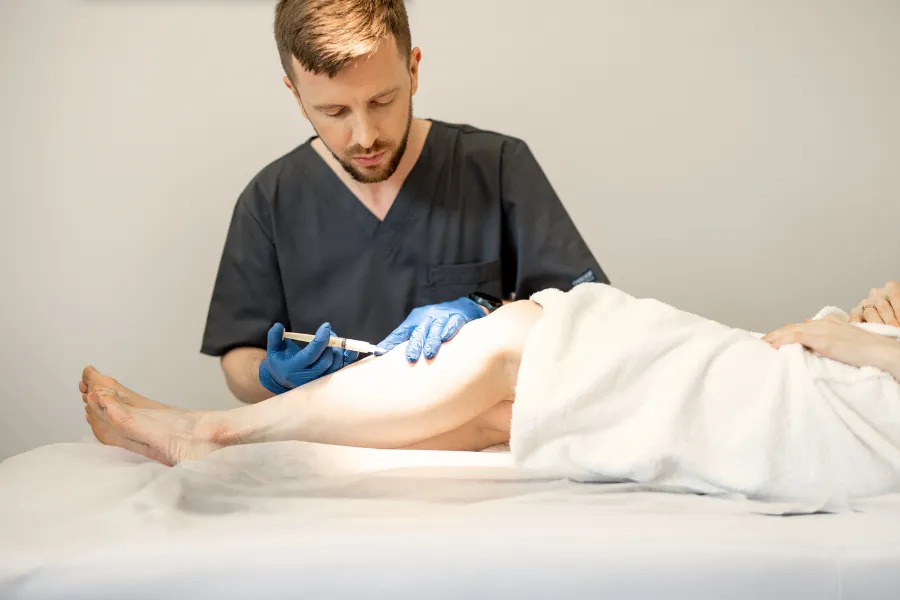
 Sclerotherapy is a minimally invasive medical procedure that eliminates spider veins and small varicose veins. During the treatment, a specialist uses a very fine needle to inject a chemical solution (a sclerosant) directly into the targeted vein.
This solution irritates the lining of the blood vessel, causing it to collapse and stick together. Over the next few months, your body naturally reabsorbs the collapsed vein, rerouting blood flow into healthier, deeper vessels and causing the visible lines on your skin to fade.
2. Are Spider Veins Just Cosmetic or a Sign of CVI?
While many people seek treatment to improve the appearance of their legs, spider veins aren’t always just a cosmetic nuisance. Sometimes, they are a surface-level warning sign of an underlying medical condition known as Chronic Venous Insufficiency (CVI).
If your spider veins are accompanied by heavy, aching legs or swelling, it means deeper vein valves may be failing. At The Vein Institute, we perform a thorough evaluation to ensure we are treating the root cause of your vein issues, not just the symptoms on the surface.
3. What to Expect During the Procedure (Does It Hurt?)
 One of the greatest benefits of this treatment is its quickness and straightforwardness. A typical session takes just 15 to 30 minutes, meaning you can easily fit it into a lunch break.
As for the pain? Most patients report feeling only a minor pinprick as the needle enters, followed by a mild, temporary stinging or cramping sensation as the solution is injected. It is highly tolerable and requires no anesthesia or downtime. However, it is still helpful to understand the potential side effects of sclerotherapy before your appointment.
4. How Many Sclerotherapy Sessions Will I Need?
While you will notice a significant improvement after their first appointment, it is rarely a “one-and-done” process. The total number of sessions depends entirely on the size and density of the spider veins being treated.
On average, most patients require 2 to 4 sessions spaced a few weeks apart to achieve their desired cosmetic goals. During your initial consultation, your provider will map out a realistic timeline for your specific legs.
5. Post-Treatment Care: The Power of Compression
What you do after your appointment matters just as much as the procedure itself. Immediately following treatment, you will be required to wear medical-grade compression stockings.
Compression stockings keep pressure on the treated vessels, preventing blood from re-entering the collapsed veins and maximizing your results.
You will also want to avoid hot tubs, heavy lifting, and direct sun exposure for a couple of weeks. Following these guidelines is key to minimizing skin hyperpigmentation after sclerotherapy.
6. Sclerotherapy vs. Laser Treatments: What’s the Difference?
 Patients frequently ask if surface lasers are a better option. While laser treatments can be effective for tiny facial veins, sclerotherapy remains the undisputed gold standard for the legs.
Chemical injections can travel through the twists and turns of a leg vein, closing down the tiny “feeder” vessels that lasers cannot reach. This results in a much higher success rate and longer-lasting clarity for your skin.
7. Understanding Sclerotherapy Cost & Insurance Coverage
When calculating your overall sclerotherapy cost, the main factor is whether the procedure is deemed medically necessary or strictly cosmetic.
If an ultrasound reveals that your spider veins are caused by underlying venous insufficiency, health insurance or Medicare may cover a portion of your diagnostics and treatment. If they are purely cosmetic, it will be an out-of-pocket expense. Our team works directly with your insurance provider to clarify your coverage before any treatment begins.
Frequently Asked Questions
Ready for Clear, Confident Legs?
You don’t have to plan your wardrobe around your veins anymore. If you are ready to explore your options for professional spider vein treatment, our expert medical team is here to guide you through every step of the journey.
Schedule your sclerotherapy consultation at Vein Institute today and take the first step toward showing off your legs with pride. To see if this treatment is right for you, take our quick Sclerotherapy Suitability Quiz.
IAC Accredited Vascular Testing
We are proud to be distinguished as an IAC Accredited Vascular Testing Facility. The Vein Institute adheres to the strictest national guidelines for vascular testing, demonstrating a commitment to the highest quality patient care.

Do crossing your legs or standing all day cause varicose veins? Separate 5 common myths from facts and learn when to seek a vein evaluation.