- What Is Stasis Dermatitis and What Causes It?
- Why Venous Diseases Like CVI Cause the Skin to Change Color
- What Is a Venous Ulcer and How Is It Linked to Skin Discoloration?
- Why Skin Discoloration Is Serious and How Treating Vein Issues Can Help
- Frequently Asked Questions
- Find a Vein Doctor Today to Lower Your Risk & Protect Your Skin
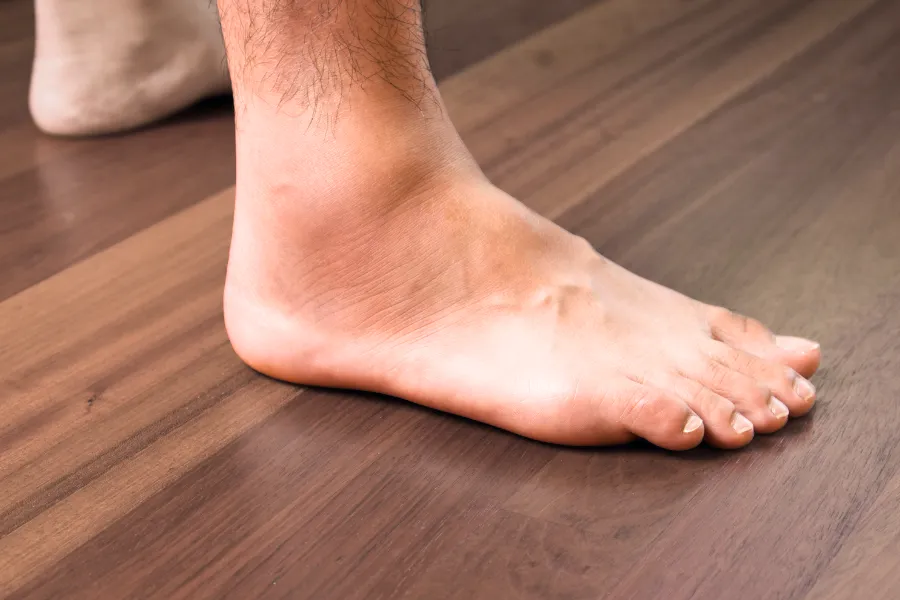
If you’ve noticed that the skin around your ankles or shins is turning a dark brown, deep red, or even a leathery purple, you might be tempted to reach for a moisturizing lotion. However, this isn’t a skin hydration issue—it is a vascular warning sign.
In the medical community, this color change is often a visible indicator of chronic venous insufficiency (CVI) reaching an advanced, dangerous stage. At The Vein Institute of Jacksonville, our specialists help patients understand that changing skin color is a biological alarm bell signaling that your circulation needs intervention to prevent further tissue damage.
What Is Stasis Dermatitis and What Causes It?
 The technical term for the itchy, reddish-brown inflammation on your lower legs is stasis dermatitis. To understand what causes it, you first have to understand the mechanics of your legs. Your leg veins work against gravity to return blood to your heart. They rely on tiny, one-way valves to keep the blood flowing in the right direction.
When these valves become weakened or damaged blood begins to pool in the lower extremities —a condition known as venous stasis. This creates a high-pressure environment within the veins. Eventually, that pressure becomes so great that fluid and blood cells are forced out of the tiny capillaries and into the surrounding skin and soft tissue. This leakage triggers an immune response, leading to chronic inflammation, itching, and scaling associated with stasis dermatitis.
Why Venous Diseases Like CVI Cause the Skin to Change Color
Many patients are confused by the specific “rusty” or bruised look of their ankles. When caused by venous disease, this discoloration results from a chemical change beneath your skin. When red blood cells leak out of your veins and die in the surrounding tissue, they release hemoglobin. Your body tries to break down this hemoglobin, forming an iron-storing protein called hemosiderin.
This iron is essentially staining your skin from the inside out. Known as hemosiderin staining, it creates a permanent or semi-permanent discoloration that can range from light yellow to deep chocolate brown. Because the iron is trapped in the tissue, no amount of scrubbing or topical cream can remove it. It is a direct physical footprint of chronic venous insufficiency, proving that your vascular system is struggling to manage blood volume.
What Is a Venous Ulcer and How Is It Linked to Skin Discoloration?
 The most significant risk of ignoring discolored skin is the eventual development of venous ulcers. To understand the link, you have to look at the health of the skin tissue. When your skin is stained with hemosiderin and swollen with fluid, it is no longer receiving the oxygen and nutrients it needs to remain healthy.
Over time, the skin becomes thin, fragile, and starved of circulation. This is the stage where even a minor “nick” from a razor, a scratch from a pet, or a small bump against a coffee table can turn into a catastrophe. Because the underlying circulation is so poor, the body cannot send the necessary “repair team” to heal the wound. The result is a venous stasis ulcer—a shallow, open sore that may weep fluid and can take months or even years to heal without proper treatment.
Why Skin Discoloration Is Serious and How Treating Vein Issues Can Help
If left untreated, discolored skin doesn’t just stay brown; it becomes hard. This is a condition called lipodermatosclerosis, in which the fat under the skin becomes inflamed and forms scar tissue. At this stage, the leg may begin to look like an “inverted champagne bottle,” with the calf wide but the ankle constricted and leathery.
This is a serious medical progression, but it is not inevitable. By treating the underlying chronic venous insufficiency, we can stop the leak at the source. Modern, minimally invasive treatments—such as endovenous ablation or sclerotherapy—allow a vein doctor to seal off the damaged veins. Once the high-pressure leak is stopped, the inflammation subsides, the risk of ulcers drops dramatically, and the skin finally has the chance to stabilize.
Frequently Asked Questions
Find a Vein Doctor Today to Lower Your Risk & Protect Your Skin
 Don’t wait for a small skin change to become a chronic, life-altering wound. If you are noticing redness, itching, or brown staining around your ankles, your body is asking for help. The earlier you seek treatment, the more options you have for a quick and easy recovery.
At The Vein Institute, our IAC-accredited team specializes in treating advanced CVI and preventing the complications of venous disease. We use the latest diagnostic technology to map your veins and create a custom treatment plan tailored to your specific needs.
IAC Accredited Vascular Testing
We are proud to be distinguished as an IAC Accredited Vascular Testing Facility. The Vein Institute adheres to the strictest national guidelines for vascular testing, demonstrating a commitment to the highest quality patient care.

Do crossing your legs or standing all day cause varicose veins? Separate 5 common myths from facts and learn when to seek a vein evaluation.