
 If you find yourself constantly wondering, “Why do my legs feel so heavy?” it might be more than just simple tiredness.
Persistent heavy legs and leg pain are often the earliest warning signs of venous insufficiency, a medical condition where your veins struggle to send blood from your limbs back to your heart.
When Heavy Legs Are a Sign of Venous Insufficiency
Here are four signs that your leg fatigue and heaviness are actually symptoms of a vein-related issue.
1. Persistent Aching or Throbbing (Especially at Night)
Do your legs start to throb the moment you finally sit down on the couch? Aching legs that intensify at the end of the day are a hallmark of chronic venous insufficiency (CVI).
When vein valves are weakened, blood pools in the lower legs instead of circulating upward. This buildup creates internal pressure, leading to a dull, heavy ache that can make it difficult to get comfortable at night.
2. Leg Swelling and Pitting Edema
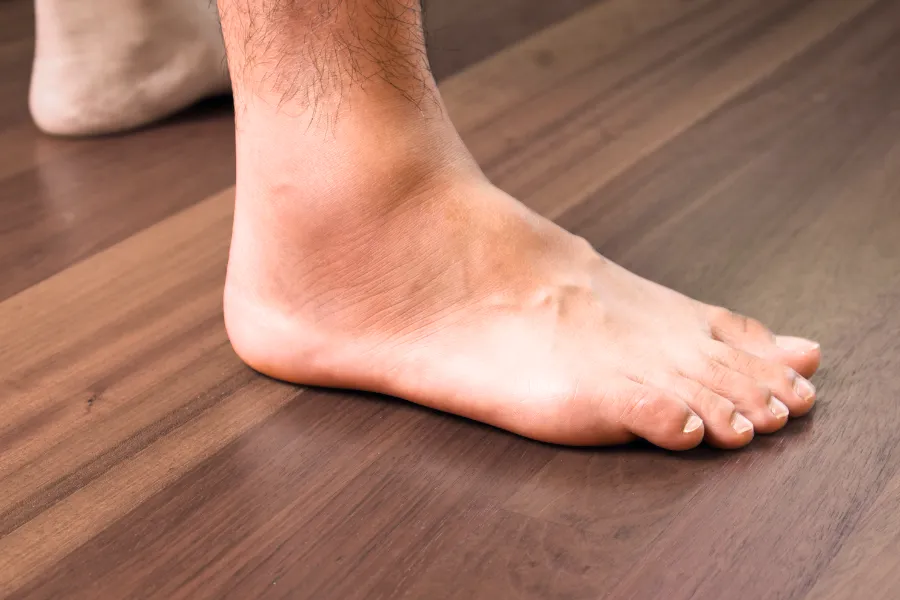
If your shoes feel tight by 5:00 PM or your socks leave deep indentations around your ankles, you are likely experiencing swollen legs. In the medical world, we often look for pitting edema, a type of swelling where pressing your finger into the skin leaves a temporary pit or indentation.
This swelling occurs because the fluid from the pooled blood is being pushed out of the veins and into the surrounding tissue.
3. Restless Legs
That creepy-crawly sensation that makes you want to kick your legs at night can be linked to your vascular health. While restless leg syndrome (RLS) can have many causes, it is frequently exacerbated by venous insufficiency. Lower extremity cramps can be a sign that your leg muscles aren’t receiving proper circulation.
4. Visible Spider or Varicose Veins
 While some symptoms of CVI happen deep beneath the surface, others are highly visible. Varicose veins, those bulging, rope-like blue or purple veins, are the most obvious physical sign that your veins are under too much pressure. Even smaller spider veins can indicate that the smaller vessels are working overtime to compensate for deeper circulation issues.
How to Find Relief From Leg Heaviness
Venous insufficiency isn’t just a cosmetic concern or a natural part of aging; it is a progressive medical condition. When the tiny valves in your leg veins fail to close properly, gravity wins, and blood begins to flow backward and pool in your lower extremities.
The good news? Modern vein treatments are minimally invasive, covered by most insurance plans, and require little to no downtime.
It may be time to get an expert opinion. Contact The Vein Institute today to schedule a consultation at our Jacksonville or St. Augustine locations. We will help you get the spring back in your step.
Frequently Asked Questions
IAC Accredited Vascular Testing
We are proud to be distinguished as an IAC Accredited Vascular Testing Facility. The Vein Institute adheres to the strictest national guidelines for vascular testing, demonstrating a commitment to the highest quality patient care.